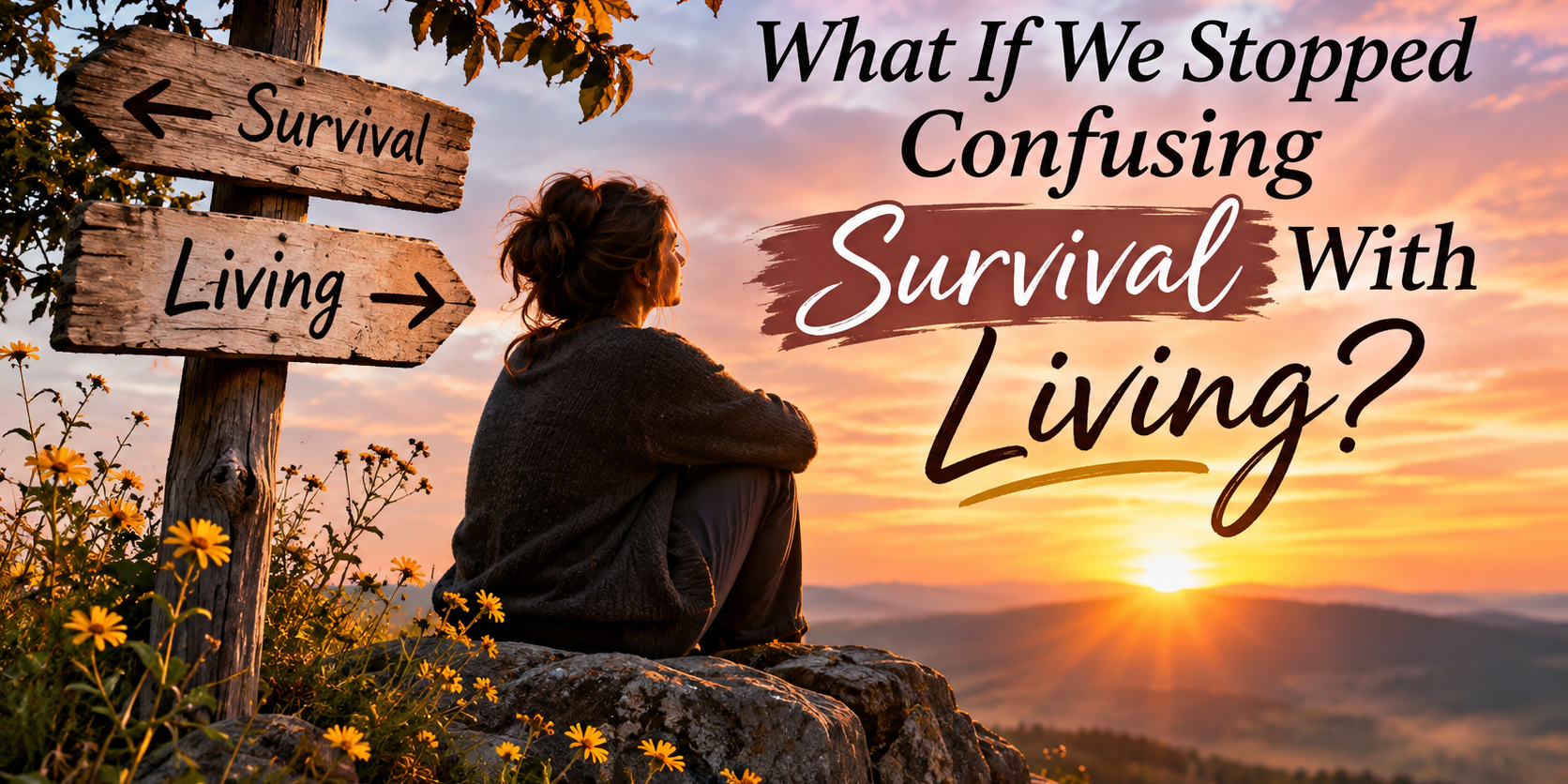
What happens when getting through the day becomes the only thing we know how to do?
There’s a difference between being alive and actually living. It’s a distinction we don’t talk about nearly enough. We celebrate survival. We admire the people who keep going despite impossible circumstances. We tell people they’re strong for enduring hardship, for getting out of bed when life feels unbearable, for carrying responsibilities that would bring someone else to their knees. And rightfully so. Surviving takes strength. But somewhere along the way, we’ve started treating survival as though it’s the ultimate destination. As though making it through another day is the same thing as having a life worth looking forward to. What if it isn’t?
When Life Becomes One Long Exercise in Getting Through It
Think about how many people spend their days simply managing their existence. They wake up already exhausted. They go to work because the bills won’t pay themselves. They take care of children, parents, partners, and everyone else’s needs while quietly putting their own somewhere at the bottom of an ever-growing list. They manage illnesses, medications, financial worries, difficult relationships, and the endless responsibilities of being an adult. They get through the day. They get through the week. They get through the month. And when someone asks how they’re doing, they say, “I’m okay.”
But are they?
Sometimes we’re so busy keeping our lives from falling apart that we forget to consider whether we’re actually enjoying any part of them. We’ve become excellent at functioning, but functioning isn’t necessarily living.
When Survival Becomes a Way of Life
For people who have experienced prolonged trauma, abuse, instability, or hardship, survival can become much more than a temporary response to difficult circumstances. It can become the lens through which they experience the entire world. You learn to anticipate problems before they happen. You become accustomed to putting everyone else’s needs ahead of your own. You learn to read the room, avoid conflict, prepare for disappointment, and keep your expectations low enough that life can’t hurt you quite so badly.
You become adaptable. Resourceful. Resilient. You become very, very good at surviving.
But what happens when the circumstances change? What happens when the danger has passed, the relationship has ended, the crisis has settled, or the environment has finally become safer? Sometimes the hardest part isn’t getting out of survival mode. It’s discovering that you don’t know what life looks like without it.
Peace can feel unfamiliar. Rest can feel undeserved. Happiness can feel temporary, as though something terrible must be waiting just around the corner. You may even find yourself uncomfortable when things are going well because you’ve spent so much time preparing for things to go wrong.
That’s an exhausting way to live, and it’s not a personal failure. It’s one of the ways prolonged hardship can shape how we experience the world.
The Uncomfortable Truth About Getting Better
We talk a lot about healing as though it’s a beautiful, uplifting journey. And sometimes it is. But sometimes healing is confusing. Sometimes it’s lonely. Sometimes it means confronting the fact that you’ve spent years putting yourself last and aren’t entirely sure who you are when you finally get to come first. Sometimes you realize that the identity you’ve built around being the strong one, the dependable one, the caretaker, or the person who never gives up has left very little room for the person underneath all those responsibilities.
Who are you when nobody needs you to fix something? What do you enjoy when you’re not doing something because it has to be done? What would you choose if you weren’t constantly making decisions based on what everyone else needs? These aren’t always easy questions. And not everyone has the luxury of changing their circumstances simply because they want something different. Poverty, disability, chronic illness, caregiving, and unsafe environments create very real limitations. We shouldn’t pretend that a change in attitude can erase those realities. But we can still acknowledge something important: people deserve more than a life spent enduring things.
Maybe Living Doesn’t Have to Be Extraordinary
Here’s where I think we’ve gotten things a little backward. We’ve allowed society to convince us that a meaningful life must look a certain way. Success. Money. Careers. Travel. Beautiful homes. Accomplishments. Milestones. We’re constantly encouraged to do more, achieve more, earn more, and become more. But what if living has very little to do with any of that? What if living is planting flowers and watching something grow? What if it’s laughing so hard that you forget, for a few minutes, about everything weighing on your shoulders? What if it’s making something with your hands, reading a book, sitting outside with a cup of coffee, or discovering a new interest simply because it makes you happy? What if it’s reconnecting with a part of yourself that got buried beneath years of responsibilities?
Maybe living is having something to look forward to. Maybe it’s learning to say no without feeling guilty. Maybe it’s allowing yourself to rest without believing you’ve somehow failed. Maybe it’s discovering that you are allowed to have needs, dreams, preferences, and boundaries of your own. And maybe, just maybe, living begins when we stop measuring our worth by how much we can endure.
You Are More Than What You’ve Survived
There is nothing wrong with being proud of your survival. If you’ve made it through circumstances that once seemed impossible, that matters. Your perseverance matters. But you are not obligated to spend the rest of your life proving how strong you are. You don’t have to keep carrying everything just because you’ve always carried it. You don’t have to remain the person everyone depends on at the expense of becoming someone you recognize and enjoy being.
You are allowed to want things that have absolutely nothing to do with survival. You’re allowed to have fun. You’re allowed to be curious. You’re allowed to make mistakes, change your mind, try something new, and discover that you actually enjoy something you never thought you’d be able to do. And if all you can manage today is getting through today, that’s okay, too. There is no deadline for healing, and there is no race to becoming a happier version of yourself. But somewhere along the way, I hope you give yourself permission to ask a different question. Not just, “How am I going to get through tomorrow?” But, “What would make me look forward to it?”
Because you deserve a life that is about more than enduring it. You deserve to experience it.
A Thought to Leave You With
If you didn’t have to spend quite so much of your energy surviving, what would you want to do with your life? Not what would you accomplish. Not what would you buy. Not what would make other people proud. What would make you happy?
It’s worth thinking about. And it’s never too late to start imagining the answer.
Discover more from No More Victims
Subscribe to get the latest posts sent to your email.