The other day I was sitting in my living room doing what millions of Americans do every day. The television was on in the background while I folded laundry and tried not to pay too much attention to the news. Then I heard the words, “Epstein files.”
My stomach dropped.
I wasn’t interested in another political debate. I wasn’t wondering who was winning or losing the latest argument. Before I could even think about any of that, my body had already reacted. My heart was racing, my chest tightened, and suddenly I wasn’t in my living room anymore.
I was somewhere I’d spent years trying to escape.
People who haven’t lived with PTSD often think a trigger is simply getting upset over something you hear or see. I wish it were that simple. A trigger is your brain pulling a fire alarm because something reminds it of danger. You know you’re safe, but your nervous system hasn’t caught up yet.
For many survivors, the constant discussion surrounding Jeffrey Epstein isn’t just another headline. Every interview, every courtroom update, every argument on television, every social media post, and every presidential address that touches on the subject can become another reminder of the things we’ve fought so hard to survive.
Then people wonder why we’re anxious.
Why we don’t want to watch the news.
Why we seem distant.
Why we suddenly leave the room.
It’s because our brains aren’t processing politics.
They’re processing trauma.
There’s a saying you’ve probably heard me use before, and I keep coming back to it because I believe it gets to the heart of the issue:
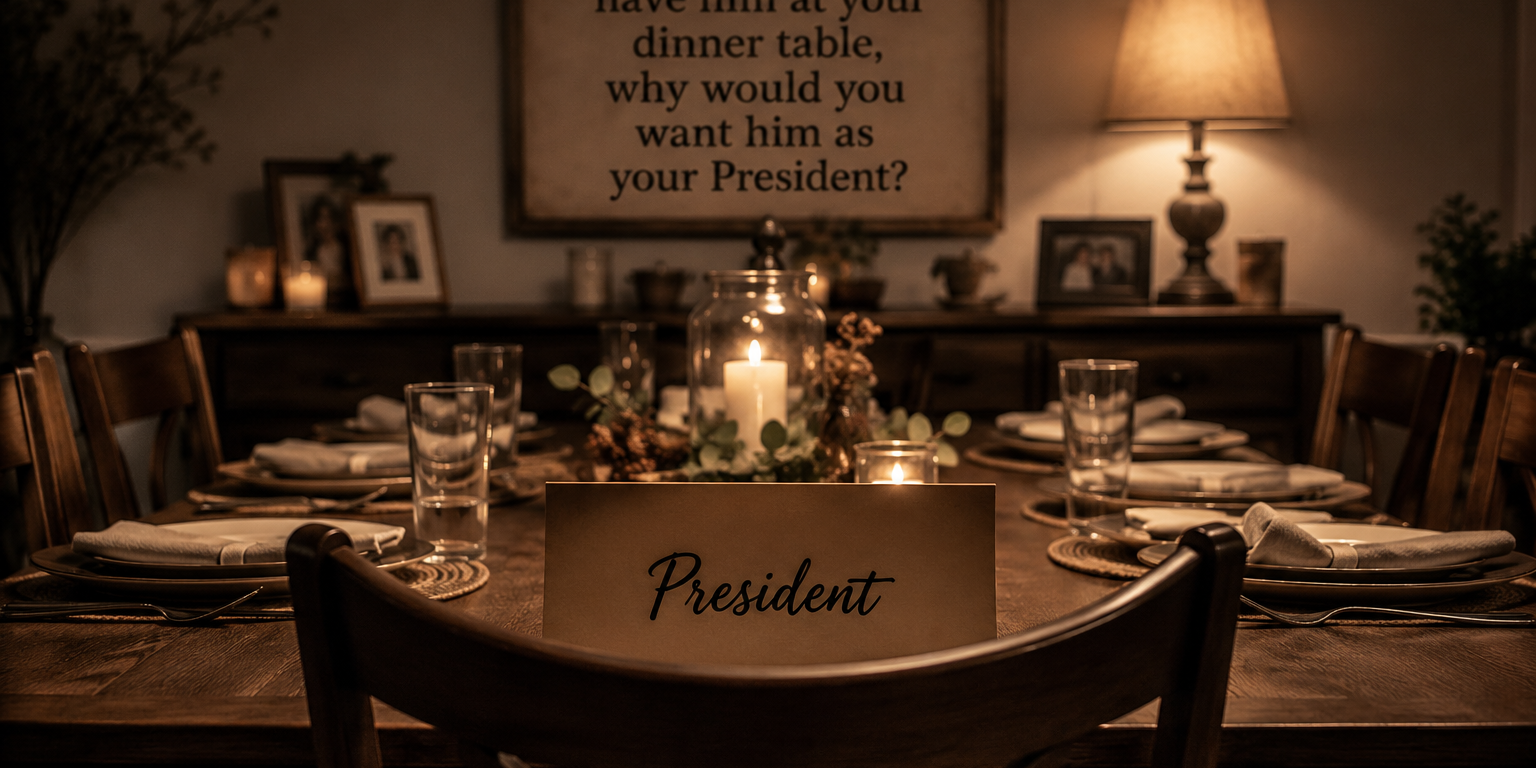
If you wouldn’t have him at your dinner table, why would you want him as your president?
To me, that question has never been about political parties. It’s about character.
Somewhere along the way we’ve become willing to overlook things in public figures that we’d never overlook in our own families. We teach our children to stay away from people who make them feel unsafe, but then we tell ourselves that power, popularity, or political success somehow changes the rules.
It doesn’t.
As survivors, we’ve spent enough of our lives watching people excuse behavior because someone was respected, influential, wealthy, talented, or useful. We know what happens when warning signs are ignored. We’ve lived the consequences.
That’s why this conversation feels different for us.
While the rest of the country debates politics, many survivors are quietly trying to keep their feet planted in the present. We’re reminding ourselves to breathe. We’re grounding ourselves. We’re turning off the television because we know another hour of headlines may cost us a night of sleep.
If that’s where you are today, I hope you’ll give yourself some grace.
Protecting your peace isn’t weakness.
Stepping away from the news isn’t ignorance.
Choosing your mental health over another political argument isn’t giving up.
It’s surviving.
The investigations should go wherever the evidence leads. Anyone who has committed crimes against children or exploited another human being should be held accountable, no matter who they are or what position they hold.
But while those investigations continue, I hope we remember something else.
Behind every headline are survivors.
Some of us are reading those stories with tears in our eyes.
Some of us are reliving memories we’d rather forget.
And some of us are simply trying to make it through another day in a world that keeps asking us to revisit the worst days of our lives.
Discover more from No More Victims
Subscribe to get the latest posts sent to your email.